
Restaurant dining room cleaning
Tables, chair backs and legs, baseboards, partitions, host stands, door handles, and high-visibility touchpoints. We focus on what guests notice first and what holds odors and sticky residue over time.
Serving Durham, North Carolina & surrounding areas
Mon–Fri 8am–6pm · Sat 9am–2pm
Keep your dining room, bar, restrooms, and kitchen-ready areas consistently clean with a documented scope, dependable scheduling, and close attention to the details health inspections notice first.
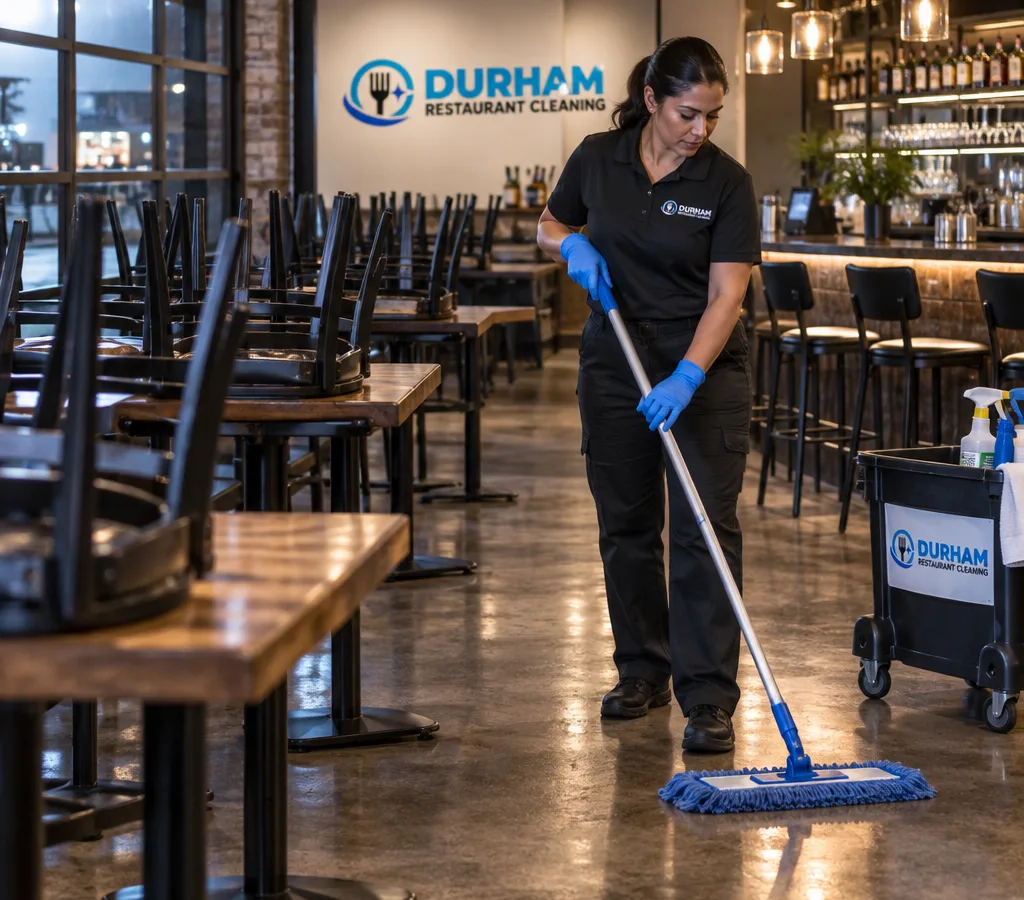
Durham restaurants have a rhythm: lunch rush, dinner turns, late-night cleanup, then opening again before the place fully cools down. Restaurant Cleaning Services need to fit that reality. Our team at Durham Restaurant Cleaning focuses on front of house, dining room, bar, restrooms, and back of house support areas with practical, repeatable methods that hold up over time.
We work from our location at 706 9th St, Suite 4 in Durham and build scopes around what matters for guest experience and inspection readiness: clean floors with safe traction, dust-free ledges and vents, sanitized touchpoints, and restrooms that stay fresh through service. If you are evaluating providers, start with what you can measure: clear checklists, defined frequencies (nightly, weekly, monthly), and a plan for high dusting and deep floor work instead of only quick wipe-downs.
For restaurants near Duke University and the 9th Street corridor, for example, heavy foot traffic makes entry mats, vestibules, and floor edges show grime quickly. In downtown Durham, bar service and late hours often mean sticky floor buildup around wells and under rails. Near Southpoint, long operating hours and steady family traffic put wear on restrooms and dining chairs. We tailor the schedule and the work order to the way your dining room actually gets used, not a generic template.
If you are looking for a broader overview of local coverage and service capabilities, this is also part of what we do as a restaurant cleaning company in Durham.
Tables, chair backs and legs, baseboards, partitions, host stands, door handles, and high-visibility touchpoints. We focus on what guests notice first and what holds odors and sticky residue over time.
Entry glass, waiting areas, service stations, POS surrounds, and floor edges where crumbs and grit collect. Front of house cleaning is where consistency matters most shift to shift.
Bar tops, rails, back bar surfaces, spill zones, and floors around wells. We target sugar and alcohol film that can turn into slippery floors and persistent odor.
Toilets, urinals, sinks, partitions, mirrors, dispensers, door hardware, and floors. We use a top-to-bottom sequence so bacteria is not pushed back onto cleaned surfaces.
Vacuuming and mopping for daily care, plus periodic scrubbing for buildup in grout lines, corners, and along baseboards. Slip awareness is part of the plan, not an afterthought.
Service corridors, dry storage floors, employee areas, and trash room edges based on your scope. We help reduce cross-contamination risk by keeping pathways and floor transitions under control.
High Dusting is one of the most skipped items in restaurant cleaning, and it is also one of the easiest things for staff and guests to notice once it builds up. We include high dusting in the scope where it makes sense for your space and ceiling height, with attention to:
We approach high dusting before detailed wipe-downs and floors. That sequencing matters because falling dust can undo the work you just paid for. When your dining area has high ceilings or exposed beams, we plan the frequency so the space stays presentable without disrupting service.
If you want the work to be predictable, we recommend a written checklist that separates nightly tasks from weekly and monthly tasks. That is how you avoid the common problem of everything being called “deep cleaning” while the same missed spots reappear every week.
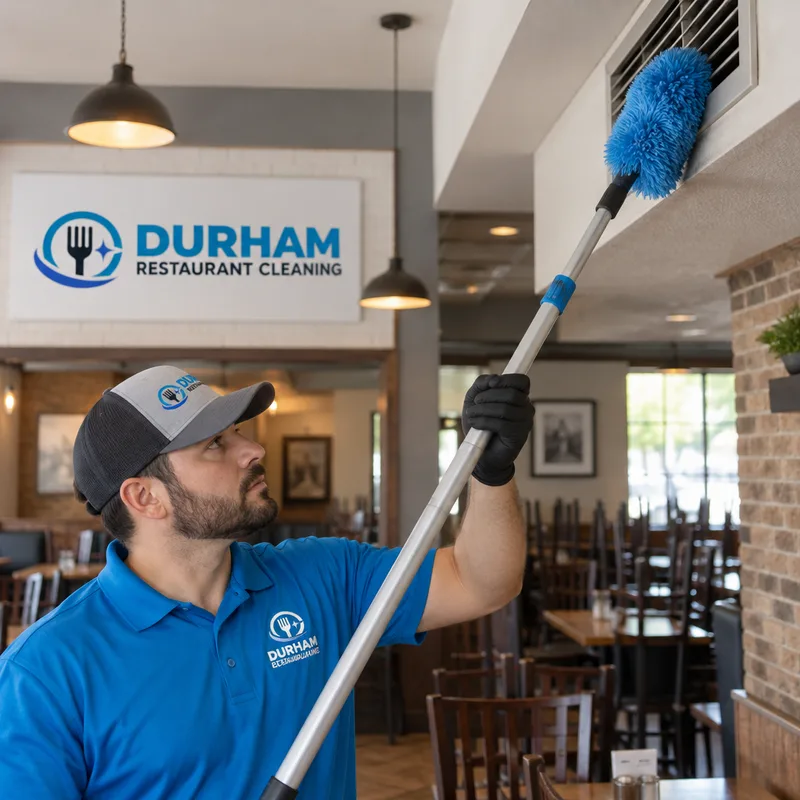
We review your dining room, bar, restrooms, and any included back of house support areas, then document what is included and what is excluded. Special attention goes to floors, corners, and high dusting points.
We align timing with your close or slow hours, confirm entry procedures, and note any areas that must stay locked or off-limits. If your restaurant runs late, we build around it instead of rushing the work.
The first service sets the baseline. We focus on buildup removal (especially on floors and bar areas) so ongoing cleanings are faster and more consistent.
We follow the checklist each visit and adjust only when something changes: seasonal patio use, a new floor finish, a layout change, or a new inspection requirement. The goal is repeatable results, not a different standard each week.
Restaurant Cleaning Services in Durham typically range from about $300 to $1,500+ per month for recurring service, depending on square footage, operating hours, and how many areas are included (dining room, bar, restrooms, and back-of-house support areas). One-time deep cleaning commonly runs about $300 to $1,200+ based on condition and detail level.
Pricing changes with floor type and buildup (grout lines and sticky bar zones take longer), restroom count, high dusting needs (ceiling height and fixtures), and access timing after close. The exact cost is confirmed after an on-site walkthrough so the scope matches your real layout and service schedule.
“We switched because our old service kept missing the same spots: the bar floor behind the rail and the baseboards in the dining room. The new checklist made it obvious what was being done, and the room stopped smelling like old mop water after close.”
Megan R.
“Restrooms were our biggest pain point during weekend service. They set up a plan that actually matches traffic, and the mirrors, partitions, and floors look consistent day to day.”
Luis T.
Yes, front of house cleaning is usually scheduled after close or during defined slow hours, with a checklist that prioritizes guest-facing touchpoints and floors first. During the walkthrough we confirm which areas must stay usable (like entry paths or a bar service lane) and build a plan around your operating hours.
Restroom cleaning typically includes toilets and urinals, sinks and counters, mirrors, partitions, dispensers, door handles, and floors. The practical goal is odor control plus clean, dry touchpoints, so the sequence matters: high surfaces first, fixtures next, floors last, with tools kept separate from food-adjacent areas.
Most restaurants do high dusting on a weekly or monthly rotation, with frequency based on ceiling height, HVAC airflow, and how visible the ledges and fixtures are to guests. Spaces with exposed ductwork, ceiling fans, or high ledges usually need it more often because dust becomes noticeable on lights and settles back onto tables.
Yes, and the method changes by surface. Tile and grout usually need periodic scrubbing to remove embedded buildup, while LVP and sealed concrete focus on correct cleaner choice and avoiding residue that makes floors hazy or slick. During the walkthrough we note your floor type and problem zones like corners, under banquettes, and around the bar.
We need a clear scope of which back-of-house areas are included (for example, service corridors, dry storage floors, employee areas), access instructions, and any safety requirements for chemicals and storage. We also confirm how trash is handled after close so the cleaning sequence does not spread debris back across cleaned floors.
Yes, one-time service is common for openings, ownership changes, or catching up after a busy season. We focus on the items that are hardest to recover with nightly wipe-downs: floor edges and grout lines, sticky bar zones, high dusting points, and restroom details like partitions and baseboards.
Tell us your hours, your layout, and the areas you want covered (dining room, bar, restrooms, front of house, and any back of house support spaces). We will confirm what is included, how often each task is done, and what it takes to keep floors and high dusting under control.