Access planning for busy locations
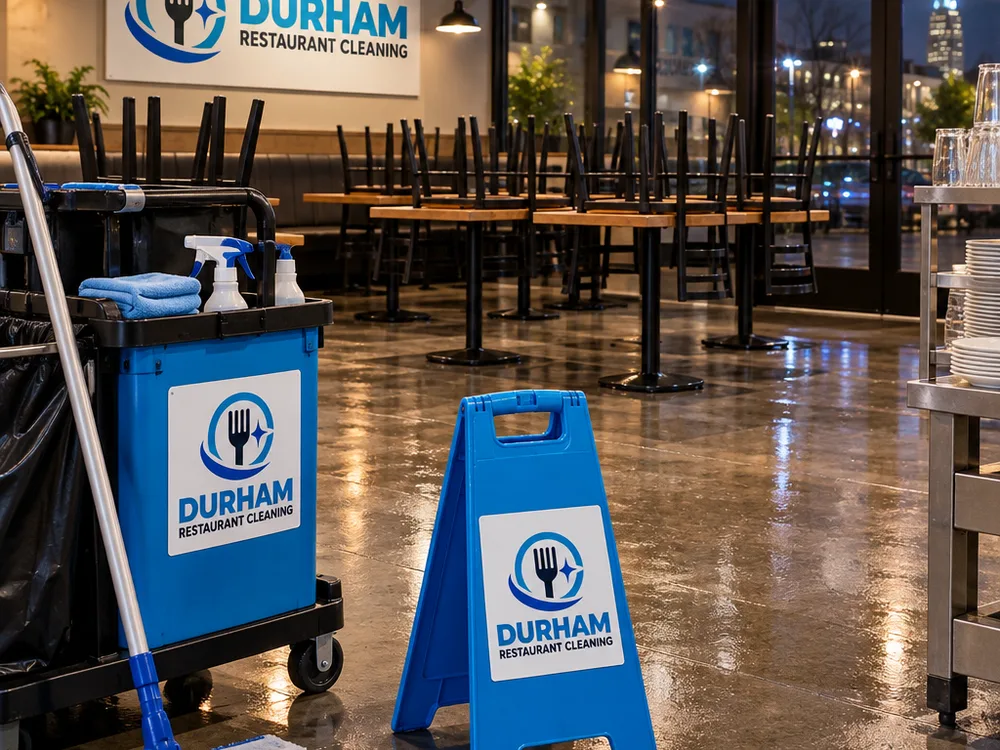
We coordinate around your hours and your space constraints, including narrow cook lines, bar areas, and dining rooms with fixed seating, so ladders and lifts are used safely.
Serving Durham, North Carolina & surrounding areas
Mon–Fri 8am–6pm · Sat 9am–2pm
Remove the grease-prone dust that collects above the cook line, dining room ceilings, and back-of-house ledges. We provide a written scope, protect food-contact areas, and clean the hard-to-reach surfaces inspectors notice.
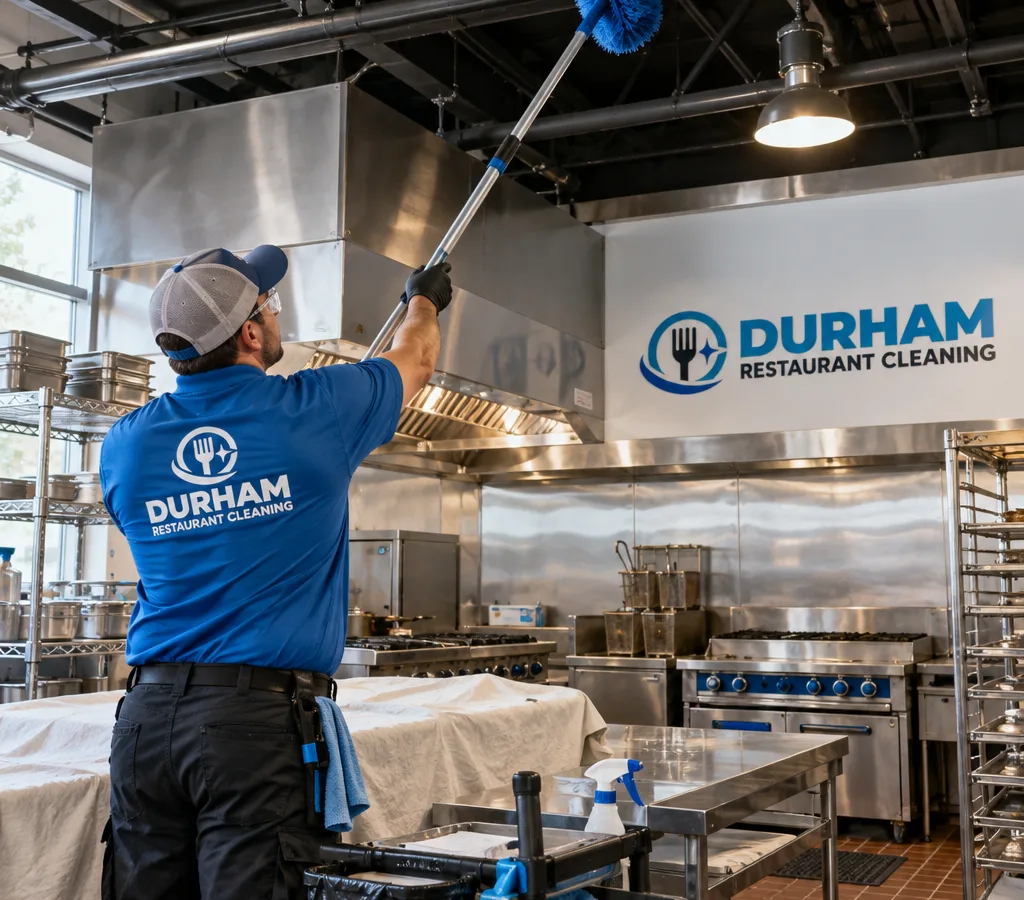
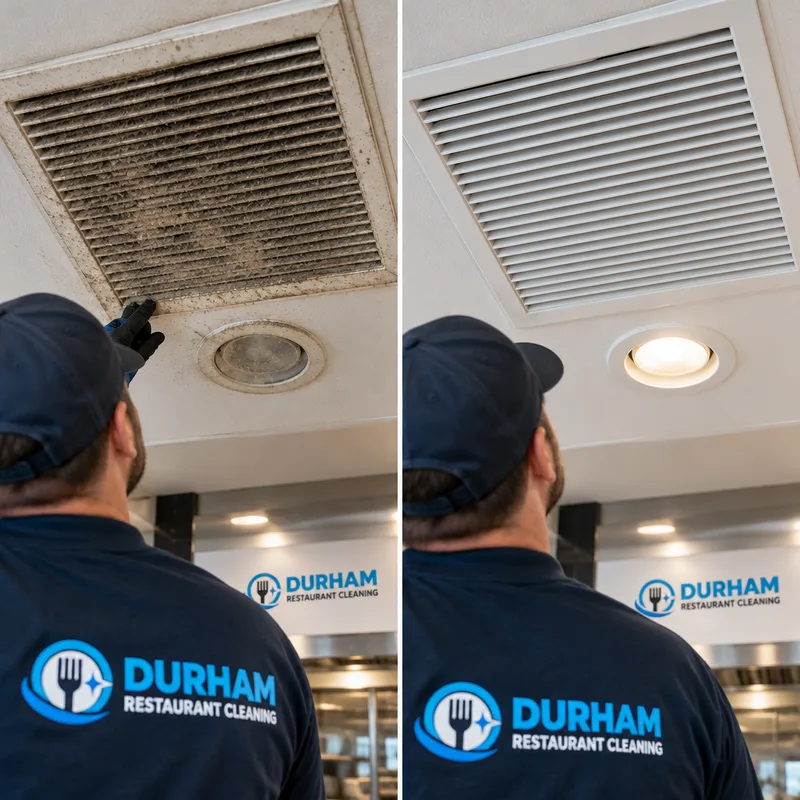
Restaurant High Dusting Cary service focuses on the surfaces most crews skip: ceiling rafters, top-side ledges, conduit, sprinkler piping, light housings, diffusers, and the tops of wall panels and coolers. In active restaurants, airborne grease can grab onto dust up high, then fall back down onto prep tables, storage racks, and floors. That is why high dusting is not cosmetic work. It is part of keeping kitchens and service areas clean, safe, and inspection-ready.
Durham Restaurant Cleaning is based in Durham (706 9th St, Suite 4, Durham, NC 27705) and schedules high dusting for Cary operators who need reliable access control, careful protection around food and equipment, and a scope that matches what your space actually has overhead. If you manage multiple areas—kitchen, dish, dry storage, bar, and dining room—we can build the scope around your priorities instead of forcing a one-size checklist.
Many customers pair overhead detail with ongoing restaurant cleaning services so dust and grease do not rebound between deeper visits, but high dusting can also be scheduled as a stand-alone project when you have a health inspection coming up, a seasonal reset, or visible buildup on vents and ceiling lines.
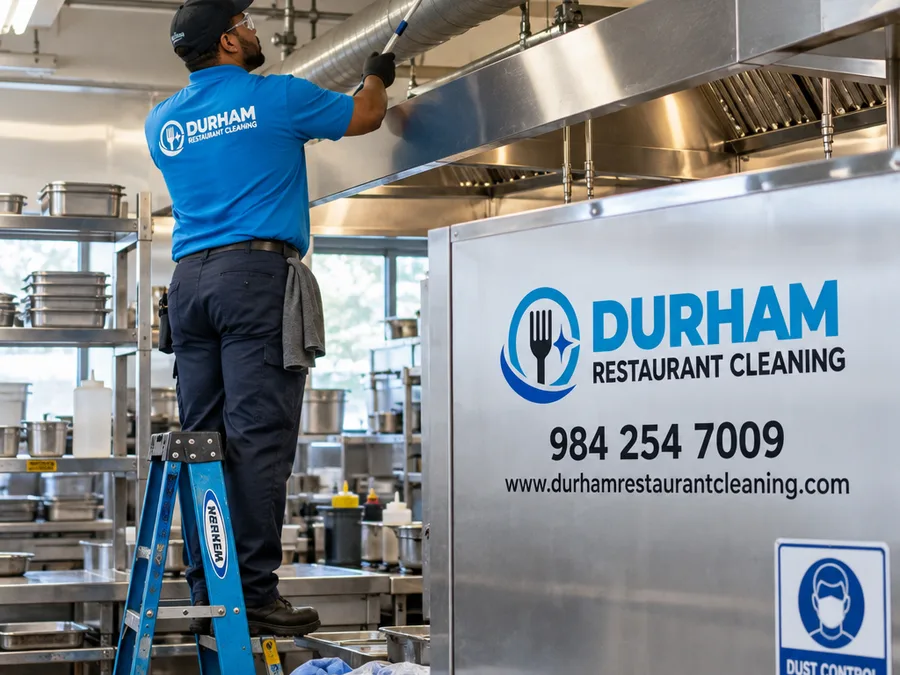
For Restaurant Kitchen Cleaning Cary work, high dusting is the overhead portion that targets horizontal surfaces and high touchpoints above shoulder height. The exact list depends on what is present in your space, but a typical scope can include:
We work to keep debris controlled. That usually means staging drop cloths, using tools that capture dust instead of scattering it, and wiping down nearby splash-back areas that receive fallout during the job.
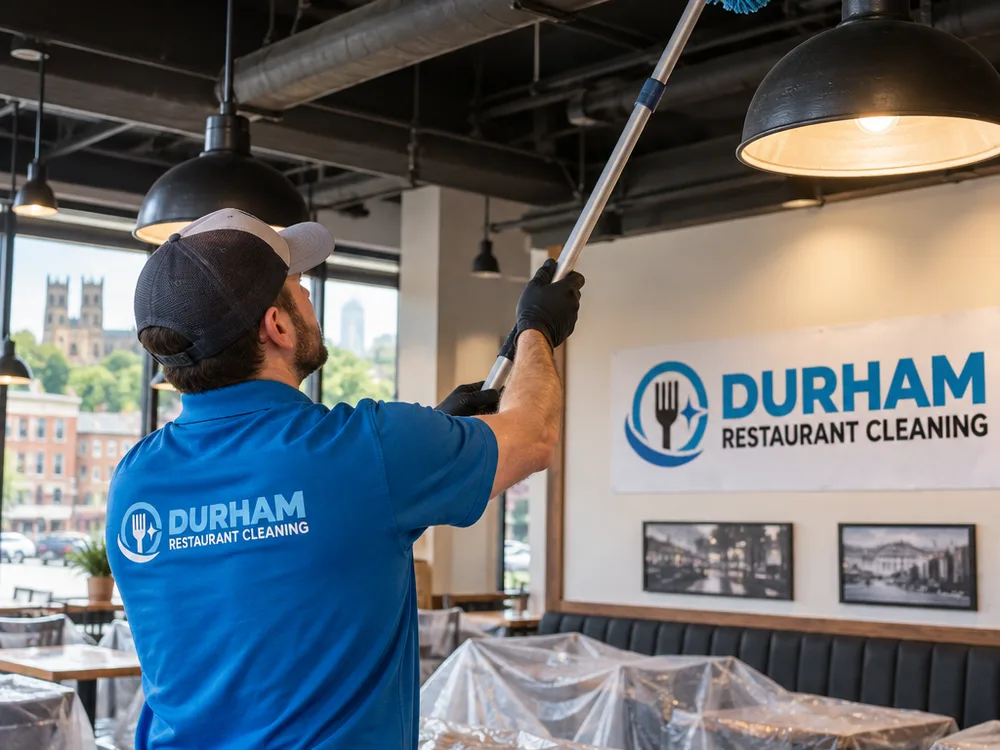
We coordinate around your hours and your space constraints, including narrow cook lines, bar areas, and dining rooms with fixed seating, so ladders and lifts are used safely.
High dusting is done with methods that reduce drift and fallout, and we protect food-contact surfaces, smallwares storage, and open prep zones before work starts.
In kitchens, dust is rarely dry and fluffy. We plan for greasy film near the hood line, make-up air areas, and above hot equipment where buildup sticks and smears if handled poorly.
Exposed ceilings, acoustic tile grids, painted drywall, and open industrial decking all collect dust differently. We define what we will clean and what is excluded before scheduling.
We finish by checking the overhead lines from floor level with proper lighting so missed ledges and fixture tops do not get left behind.
We review the areas you want addressed—kitchen, storage, bar, dining room, and restrooms—identify ceiling type and access points, and note sensitive zones like open prep tables, exposed product, and POS stations.
Before overhead work starts, we stage ladders or appropriate access equipment, cover or move items that can be contaminated, and confirm what equipment needs to be powered down or avoided.
We clean from the highest points down: rafters and piping first, then fixtures, grilles, and ledges. This reduces rework and keeps debris moving toward areas that can be cleaned last.
After high dusting, we wipe contact points disturbed during access and inspect from multiple angles. If dust falls onto protected surfaces, those areas are addressed before we wrap.
You get confirmation of what was completed and practical guidance on how often your space typically needs high dusting based on cooking volume, ceiling style, and airflow.
Restaurant high dusting in Cary typically ranges from about $350 to $1,500+ per visit, depending on ceiling height, square footage, and how much greasy buildup is present near the cook line and HVAC faces. A small dining room or single kitchen zone is often at the lower end, while full kitchens plus dining, bar, and storage with exposed rafters and lots of fixtures land higher.
Price changes most with access needs—ladders versus lift—the number of overhead obstructions such as pipes, lights, and diffusers, and the amount of prep required to protect food-contact areas. Exact pricing is confirmed after a walkthrough and a written scope for your specific space.
Most restaurants schedule high dusting on a recurring cadence that matches cooking volume and ceiling type, commonly quarterly or semiannually, with more frequent service for heavy grease operations and exposed-ceiling dining rooms. The right interval depends on how quickly dust and grease film reappear on rafters, diffusers, and fixture tops after a reset.
Often, yes, but it depends on what areas are open and what protection is possible around food and prep surfaces. For many Cary operations, the cleanest approach is to schedule after hours or between services so we can work top-down without risking fallout onto open product, clean utensils, or active prep lines.
High dusting covers the overhead surfaces around the hood area, such as nearby ceiling lines, vent faces, and fixture tops, but it is not the same as a code-required hood and duct cleaning. If your goal is a full kitchen reset, we can coordinate the scope so the work complements whatever hood service schedule you already maintain.
The most commonly missed spots are the tops of light housings, the upper lip of diffusers and return grilles, the tops of walk-ins, and narrow ledges above FRP panels or door headers. These surfaces collect dust that is easy to see once overhead lighting hits it, and they are also the areas inspectors and managers notice first.
We typically need clear access to the areas being serviced, confirmation of any spaces that must stay off-limits, and a plan for protecting or relocating exposed items like clean smallwares, paper goods, and open food containers. If you have a ladder policy, alarm instructions, or specific entry timing for your Cary location, we incorporate that into the work plan.
Tell us your ceiling height, the areas you want addressed—kitchen, dining, storage, or bar—and any scheduling limits. We will confirm access needs, outline what's included, and set a plan that keeps overhead dust and grease under control.